

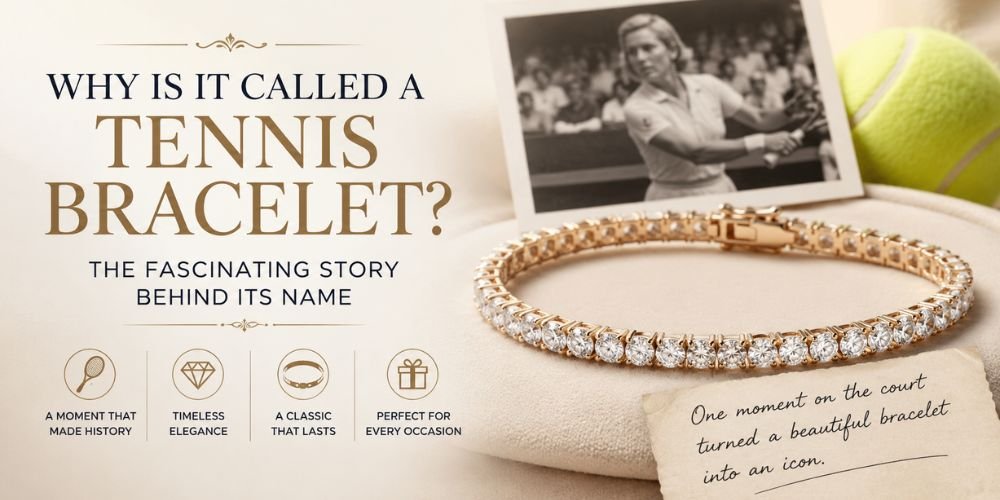
Some jewellery pieces are named after their design, while others are inspired by a gemstone or a particular era. The tennis bracelet is different. Despite its sporty name, it wasn’t created for the tennis court. Instead, it earned its now-famous name because of one unforgettable moment during a professional tennis match.
Today, the tennis bracelet is one of the most recognisable and cherished pieces of fine jewellery. Its elegant design, versatility, and timeless appeal have made it a favourite for everyday wear and special occasions alike. But before it became known as a tennis bracelet, this classic style had a very different name.
Here’s the fascinating story behind how a simple on-court incident changed jewellery history forever.
Summary:
A tennis bracelet gets its name from American tennis champion Chris Evert, who famously wore a diamond bracelet during a US Open match. During play, the bracelet’s clasp came undone, causing it to fall onto the court. Evert asked officials to pause the match while it was recovered, and the moment quickly became headline news.
As the story spread, jewellers and customers began referring to the style as a tennis bracelet. Although the bracelet itself had existed for decades, this widely publicised incident gave it the name we know today.
The Story That Changed Jewellery History
Every iconic piece of jewellery has a story, but few are linked to a single moment as memorable as the tennis bracelet.
A Diamond Bracelet That Stopped Play
Long before the term “tennis bracelet” became popular, Chris Evert was known for wearing a slim diamond bracelet during professional matches. It was an elegant choice that reflected her personal style, even while competing at the highest level.
During a US Open match, the bracelet unexpectedly slipped from her wrist after its clasp came undone. Concerned about losing such a valuable piece, Evert asked officials to stop play until it could be found.
Television viewers watched as the search unfolded on court, turning an unexpected interruption into one of the most talked-about moments in tennis. What could have been a minor mishap soon became part of jewellery history.
The incident attracted worldwide media attention, and before long, customers began asking jewellers for the same style of bracelet worn by the tennis star. Gradually, the name tennis bracelet replaced the original term, and it has remained part of the jewellery world ever since.
What Was It Called Before?
Interestingly, the bracelet wasn’t a new invention.
Before the famous tennis match, jewellers commonly referred to this design as a diamond line bracelet. The name described exactly what it was: a continuous line of carefully matched diamonds linked together to create a seamless, elegant appearance.
This style had already been admired for decades and was particularly popular for its understated sophistication. The bracelet’s flexible design made it comfortable to wear, while its uninterrupted row of diamonds offered a refined look that suited both formal occasions and everyday elegance.
Although the original name accurately described its design, the story behind Chris Evert’s bracelet gave it something far more memorable: a name with a history.
What Makes a Tennis Bracelet Unique?
While the name may have changed, the defining features of a tennis bracelet have remained remarkably consistent.
A traditional tennis bracelet is designed with a single row of diamonds or gemstones that are carefully matched in size, shape, and colour. Each stone is individually set and connected by flexible links, allowing the bracelet to move naturally with the wrist.
Several characteristics set a tennis bracelet apart:
- A continuous row of evenly matched diamonds or gemstones
- Flexible links for exceptional comfort
- A secure clasp, often paired with a safety catch for added protection
- A balanced, symmetrical design that sits neatly around the wrist
- A timeless style suitable for both everyday wear and special occasions
Although natural diamonds remain the most popular choice, modern tennis bracelets are also available with lab-grown diamonds and coloured gemstones such as sapphires, emeralds and rubies. They can be crafted in yellow gold, white gold, rose gold or platinum, allowing wearers to choose a style that reflects their personal taste.
Why Tennis Bracelets Have Never Gone Out of Style
Fashion trends come and go, but some jewellery designs remain just as desirable generation after generation. The tennis bracelet is one of those rare classics.
Its enduring appeal lies in its simplicity. Rather than relying on bold shapes or elaborate details, it celebrates refined craftsmanship and balanced design. The result is a piece that complements almost any outfit without overwhelming it.
A tennis bracelet is equally at home with everyday clothing, business attire or evening wear. Many people choose to wear theirs daily because it offers subtle luxury without feeling overly formal.
Its versatility also makes it a meaningful gift. Whether celebrating an anniversary, birthday, milestone achievement or special occasion, a tennis bracelet is a piece that can be treasured for years and often passed down through generations.
Choosing a Tennis Bracelet You’ll Treasure
If you’re considering adding a tennis bracelet to your jewellery collection, a few thoughtful considerations can help you find the perfect piece.
Choose Quality Craftsmanship
A tennis bracelet is designed to be worn and enjoyed, so quality matters. Look for secure settings, durable links and a well-made clasp with an additional safety catch to help protect your investment.
Select the Right Metal
The choice of precious metal can influence both appearance and everyday wear.
- Yellow gold offers classic warmth and timeless appeal.
- White gold creates a contemporary look that beautifully complements diamonds.
- Rose gold provides a softer, romantic aesthetic.
- Platinum is valued for its durability and naturally white finish.
Consider Your Lifestyle
If you plan to wear your bracelet regularly, comfort is just as important as appearance. A well-fitted tennis bracelet should move gently around the wrist without feeling tight or excessively loose.
Diamonds or Coloured Gemstones?
While diamonds remain the traditional choice, coloured gemstones can add personality and meaning. Sapphires, emeralds and rubies each bring their own character while maintaining the elegant silhouette that defines a tennis bracelet.
Frequently Asked Questions
Was a tennis bracelet originally designed for tennis?
No. The bracelet style existed long before it became associated with the sport. It earned its name after Chris Evert’s diamond bracelet fell off during a professional tennis match, bringing worldwide attention to the design.
What was a tennis bracelet called before?
Before the famous on-court incident, jewellers typically referred to the style as a diamond line bracelet, reflecting its continuous row of matching diamonds.
Can you wear a tennis bracelet every day?
Yes. Tennis bracelets are designed to be comfortable enough for daily wear. Choosing a well-crafted bracelet with a secure clasp helps ensure it remains both beautiful and practical.
Are tennis bracelets only made with diamonds?
Not at all. While diamonds are the traditional choice, many modern tennis bracelets feature gemstones such as sapphires, emeralds, rubies or other precious stones, offering a colourful alternative to the classic design.
Why are tennis bracelets considered timeless?
Their elegant simplicity, balanced design and versatility have allowed tennis bracelets to remain fashionable for decades. Rather than following changing trends, they offer a classic style that suits a wide range of occasions and personal tastes.
A Name Born from History, A Design Made to Last
The tennis bracelet may have earned its name from an unexpected moment on the tennis court, but its enduring popularity comes from far more than an interesting story. With its graceful design, exceptional craftsmanship, and effortless versatility, it has become one of the most enduring icons of fine jewellery.
Whether worn as an everyday signature piece or gifted to mark a significant milestone, a tennis bracelet continues to represent timeless elegance. Sometimes, the most memorable names aren’t carefully planned—they’re simply created by moments that leave a lasting impression.