

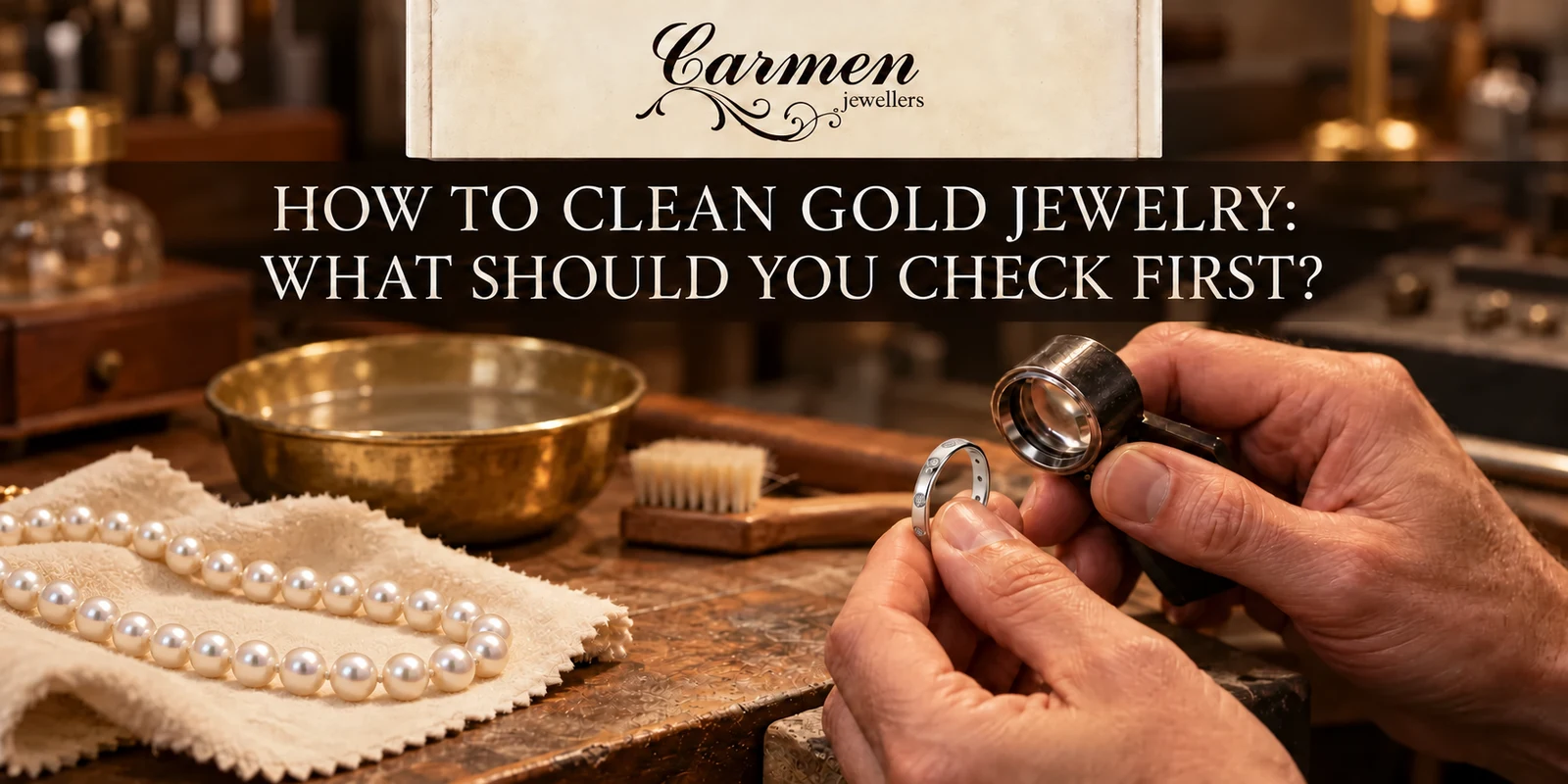
Start with the piece rather than the cleaning product. A plain gold band and a gold pendant holding a pearl need different decisions, even if both look dirty.
Read the receipt or product description if you have it. Look for information about gold purity, plating, gemstones and special finishes. A number stamped on the jewellery does not describe every component or confirm its condition.
Place the item on a clean cloth under good light. Look for open links, bent claws, a damaged clasp or a stone that appears uneven. Do not shake the jewellery to test a setting.
If you notice damage, stop. Cleaning can wait until the piece has been assessed.
Does the whole piece need the same treatment?
Not necessarily. A chain may be plain gold while its pendant includes a delicate gemstone. Check whether the pendant can be removed without forcing any part.
The GIA jewellery care guide explains that chemicals, gemstone treatments and ultrasonic cleaning can affect jewellery differently. It also recommends rinsing in a container rather than directly over a sink.
When learning how to clean gold jewellery, this is the most useful principle: choose a method suitable for the entire item.
How to clean gold jewellery at home
This guide to how to clean gold jewellery applies only to an intact plain gold piece with no stones, glued components or finish requiring special care. Follow any specific instructions supplied with your jewellery.
1. Prepare a clear workspace
Set out two small bowls, a clean lint-free cloth and a very soft brush. Choose a stable surface away from the edge of a sink.
Clean one item at a time so you can notice any changes.
2. Make a mild cleaning solution
Add a little mild soap to lukewarm water. Avoid concentrated mixtures.
Avoid experimenting with several products together. If the soap contains abrasive particles or you are unsure about its ingredients, choose another product or ask your jeweller.
3. Wash gently
Move the item gently through the solution. If it needs brushing, use light strokes and avoid pulling on links or forcing bristles into small openings.
A cleaning session should not become an attempt to scrape away every mark. Stop if you encounter stubborn material or notice movement in a component.
4. Rinse in the second bowl
Use clean lukewarm water to remove soap residue. Keep the jewellery in view throughout the rinse.
Check that the bowl is empty before discarding the water.
5. Dry and inspect
Pat the piece with the lint-free cloth. Allow remaining moisture to dry before putting it away.
Look at the item again under the same light. If dullness remains, do not assume stronger cleaning is the answer. Make a note of the area and ask for advice.
Which gold pieces need a different approach?
When browsing warm-toned styles for regular wear, check the individual materials before choosing a cleaning routine.
Use this table as a preparation checklist. It is not a substitute for instructions specific to your jewellery.
| Piece or condition | Sensible next step |
|---|---|
| Plain gold with no visible damage | Consider the gentle routine above |
| Gold-plated jewellery | Follow the maker’s care instructions |
| Gold set with pearls or opals | Request gemstone-specific guidance |
| Antique jewellery or unknown repairs | Arrange an inspection before soaking |
| Loose stone, bent claw or broken link | Stop wearing it and seek assessment |
| Textured, satin or decorative finish | Confirm how the finish should be maintained |
If your piece contains pink diamonds, Carmen’s advice for caring for coloured diamond pieces provides a separate starting point. Keep the stone and its setting in the same care discussion.
How to clean gold jewellery without harsh products
Avoid toothpaste, abrasive powders, bleach and improvised combinations of household chemicals. Boiling water and vigorous scrubbing are also poor default choices.
Do not use a polishing product simply because its label says “jewellery”. Confirm that it suits the material and finish. Cleaning and polishing are different jobs.
An ultrasonic machine is not an automatic upgrade to hand cleaning. Ask whether your particular stones, settings and previous repairs are suitable before using one.
For white gold, a warmer-looking area may need assessment of the surface finish. More scrubbing will not resolve every colour change.
A three-question cleaning decision check
Before deciding how to clean gold jewellery, answer these questions in order.
1. Do I know what the piece contains?
If not, find the original description or ask a jeweller to identify the relevant materials.
2. Is it structurally sound?
If a link, clasp or setting looks damaged, arrange an assessment first.
3. Am I removing dirt or trying to change the finish?
Surface cleaning is different from correcting scratches, restoring plating or repairing wear.
For example, consider two hypothetical items: a plain gold band with fingerprints and a pearl pendant with residue around its setting. The band may qualify for the gentle routine. The pendant needs separate advice because the pearl changes the cleaning decision.
This framework prevents a common mistake: using the same method on everything in the jewellery box.
How often does gold jewellery need cleaning?
Let the item’s condition and care instructions guide you. There is no useful single schedule for every ring, chain and pair of earrings.
Check frequently worn pieces regularly. If jewellery looks dirty, assess whether a gentle clean is suitable rather than waiting for a special occasion.
For Perth beach days, gardening or household chores, decide where you will safely leave your jewellery before starting. Avoid putting a ring loose in a pocket or wrapping it in a tissue.
Keep finish-specific care notes with your purchase information.
When should you ask a jeweller?
Book an assessment when a piece catches on clothing, a clasp becomes unreliable or a stone looks different in its setting. Stop wearing anything that appears insecure.
Bring any available receipt, repair history and gemstone information. Explain what you noticed and which products you have already used.
Ask what the proposed work includes. Inspection, cleaning, polishing, replating and repair should not be treated as interchangeable services. Confirm any quotation before authorising work.
Frequently Asked Questions
Can I clean 9ct and 18ct gold the same way?
An intact plain piece may suit the same gentle routine. Purity alone does not determine the method. Check the finish, construction and any gemstones first.
Can I clean gold jewellery with toothpaste?
Avoid toothpaste. Use a mild approach suitable for the piece rather than an abrasive household product.
Can I soak a gold ring with gemstones?
Only after confirming that the stones, treatments and setting are suitable. When those details are unknown, ask a jeweller before soaking.
Will cleaning remove scratches or restore white gold plating?
No. Cleaning removes surface residue. Scratches and worn plating require a separate assessment and may need professional work.
How do I clean gold jewellery that still looks dull?
Stop repeating stronger treatments. Ask whether the appearance comes from residue, wear, a surface finish or another issue.
Choose care that suits your jewellery
Knowing how to clean gold jewellery starts with understanding what you own. Keep the routine gentle and ask questions when the item needs more than surface cleaning.
Explore Carmen’s pieces for your everyday collection and ask the team about appropriate care when choosing your next piece.