

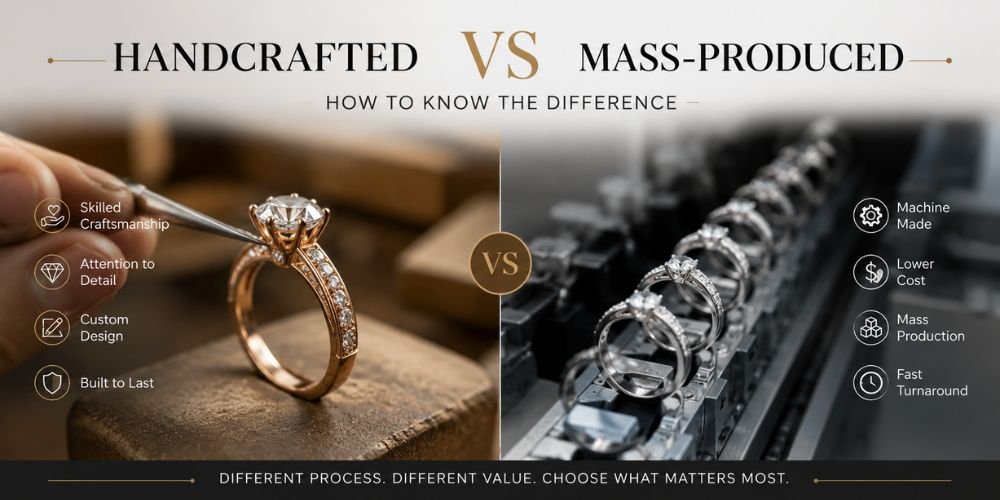
In a world where jewellery is more accessible than ever, many buyers are beginning to look beyond appearance alone. Whether it’s an engagement ring, wedding band or meaningful gift, people are becoming more conscious of how jewellery is made, where it comes from and the craftsmanship behind it.
This shift has sparked growing interest in handcrafted jewellery, bespoke engagement rings and artisan-made fine jewellery designed with individuality and longevity in mind. While mass-produced jewellery continues to dominate large retail markets, handcrafted pieces are increasingly valued for their attention to detail, emotional significance and lasting quality.
Understanding the difference between handcrafted and mass-produced jewellery can help buyers make more informed decisions, particularly when investing in pieces intended to be worn and treasured for years to come.
Although both styles of jewellery serve different purposes, the way a piece is created can significantly influence its durability, uniqueness, comfort and overall long-term value.
Here’s what truly separates handcrafted jewellery from mass-produced jewellery, and how to recognise the difference when choosing pieces that matter most.
What Is Handcrafted Jewellery?
Handcrafted jewellery is created with significant involvement from skilled jewellers and artisans throughout the production process. Rather than relying entirely on automated manufacturing systems, handcrafted pieces are shaped, refined and finished through detailed human workmanship.
Depending on the design, this process may involve carefully carving wax models by hand, individually setting gemstones, refining metalwork through manual polishing techniques and inspecting every detail before the piece is completed. These traditional jewellery-making methods allow artisans to focus closely on balance, symmetry, durability and finishing quality.
Unlike factory-made jewellery produced in large quantities, handcrafted jewellery places emphasis on individuality and craftsmanship rather than speed or volume. Each piece carries subtle characteristics that reflect the hands behind its creation, giving it a more personal and distinctive feel.
This is one of the reasons handcrafted engagement rings, bespoke jewellery and handmade wedding bands continue to appeal to buyers seeking something more meaningful than mass-market designs.
Because handcrafted jewellery receives greater attention throughout production, it is often recognised for:
- Refined finishing and detailing
- More secure gemstone settings
- Stronger overall construction
- Greater design flexibility
- Long-term wearability and repairability
For many Australians, handcrafted jewellery is not simply about luxury, it’s about owning something thoughtfully made, personal and designed to last well beyond changing trends.
What Is Mass-Produced Jewellery?
Mass-produced jewellery is manufactured using large-scale production methods designed to create identical pieces quickly and efficiently. These processes typically rely on automated machinery, standardised moulds and high-volume casting techniques to produce jewellery in bulk.
Modern jewellery manufacturing often incorporates CAD software, machine casting, automated polishing systems and assembly-line production to streamline the process and reduce costs. This allows retailers to produce large collections at faster speeds while maintaining consistent designs across thousands of pieces.
Mass-produced jewellery can be a practical option for:
- Trend-driven fashion jewellery
- Fast retail collections
- Lower-budget purchases
- Buyers seeking simple, everyday styles
However, because production is focused heavily on efficiency and scalability, there may be less attention given to the finer craftsmanship details that distinguish handcrafted jewellery.
For example, factory-made pieces may sometimes feature lighter metal weights, simplified settings or less refined finishing techniques in order to optimise manufacturing speed and production costs.
That does not necessarily make mass-produced jewellery lower quality across the board. In many cases, it serves a different purpose within the jewellery market. The key distinction lies in the level of craftsmanship, individuality and long-term value the piece is designed to offer.
Handcrafted vs Mass-Produced Jewellery: The Key Differences
Craftsmanship & Attention to Detail
One of the clearest differences between handcrafted and mass-produced jewellery is the level of care involved in the finishing process.
In handcrafted jewellery, skilled artisans spend time refining details that are often overlooked in large-scale manufacturing. This includes carefully aligning gemstone settings, smoothing edges, balancing proportions and polishing the piece by hand to achieve a more refined finish.
These small details can significantly affect how jewellery looks, feels and wears over time.
Mass-produced jewellery, by comparison, is designed for consistency and efficiency. While automated production creates uniformity, it may not always achieve the same level of precision and individuality that comes from detailed artisan craftsmanship.
This is particularly noticeable in bespoke engagement rings and handmade jewellery, where experienced jewellers focus on creating pieces that feel balanced, secure and beautifully finished from every angle.
Quality of Materials & Construction
The quality of craftsmanship often extends beyond appearance alone and into the structural integrity of the jewellery itself.
Handcrafted jewellery is commonly produced with durability in mind, especially when creating engagement rings and fine jewellery intended for long-term daily wear. Jewellers may use thicker metal structures, stronger settings and more carefully reinforced designs to improve longevity.
In contrast, some mass-produced jewellery is manufactured with lighter materials or simplified structures to improve efficiency and reduce production costs.
Over time, these construction differences can influence:
- How securely do gemstones remain in place
- How well the ring withstands everyday wear
- How easily the piece can be repaired or resized
- How long does the jewellery maintain its original appearance
For buyers investing in fine jewellery designed to become a future heirloom, craftsmanship and construction quality play an important role in long-term wearability.
Individuality & Design Flexibility
One of the strongest appeals of handcrafted jewellery is the sense of individuality it offers.
Because handcrafted pieces involve manual workmanship and custom detailing, no two pieces are ever completely identical. Even subtle finishing variations can give jewellery a more personal and authentic character.
This is especially valuable for buyers looking for:
- Bespoke jewellery
- Handmade engagement rings
- Non-traditional engagement rings
- Coloured gemstone jewellery
- Custom wedding bands
- Unique jewellery designs
Mass-produced jewellery, on the other hand, is intentionally created to look identical across large quantities. While this can suit buyers seeking affordability and convenience, it often lacks the uniqueness many customers now prioritise when purchasing meaningful jewellery.
As more Australians move towards personalised luxury and custom jewellery design, handcrafted pieces continue to stand out for their originality and emotional significance.
Durability & Long-Term Wear
Jewellery designed for everyday wear needs to do more than simply look beautiful; it needs to withstand years of regular use.
This is particularly important for engagement rings and wedding bands worn daily over decades.
Because handcrafted jewellery is often made with greater attention to structural detail, many pieces offer stronger durability and better long-term performance. Skilled jewellers carefully consider factors such as stone security, metal thickness, balance and wear resistance throughout the creation process.
Mass-produced jewellery may sometimes prioritise lightweight construction or simplified production methods that are better suited for short-term fashion trends rather than lifelong wear.
Well-crafted jewellery is also generally easier to maintain, resize and repair over time, making it a more practical long-term investment for many buyers.
Emotional Value & Meaning
Jewellery is rarely just decorative. It often represents some of life’s most meaningful moments, including engagements, weddings, anniversaries and family milestones.
Because handcrafted jewellery involves artistry, personal craftsmanship and greater design intention, many people feel a deeper emotional connection to these pieces.
A handcrafted engagement ring or bespoke pendant often carries a story behind its creation, from selecting gemstones to refining the final design. That sense of involvement and individuality can make the finished piece feel far more personal than something chosen from mass retail production.
For many buyers, this emotional value becomes just as important as the jewellery itself.
How to Spot Truly Handcrafted Jewellery
As handcrafted jewellery becomes more popular, many brands now use terms like “handmade” or “artisan” quite loosely. In reality, some pieces are largely machine-produced before receiving minimal hand-finishing afterwards.
Understanding how to identify genuine craftsmanship can help buyers recognise the difference.
Examine the Fine Detailing
One of the strongest indicators of handcrafted jewellery is the quality of the finishing work.
Carefully crafted pieces often feature:
- Smooth edges and refined polishing
- Balanced gemstone placement
- Even and secure prongs
- Detailed under-gallery finishing
- Clean transitions between settings and metalwork
Experienced jewellers spend time refining these smaller details because they affect both the appearance and durability of the piece.
Pay Attention to Weight & Balance
Well-made jewellery often feels balanced and substantial when held or worn.
This doesn’t necessarily mean heavier is always better, but quality handcrafted jewellery is usually designed with structural integrity in mind rather than simply minimising metal weight for mass production efficiency.
A thoughtfully crafted ring should feel comfortable, secure and proportionate on the hand..
Ask About Customisation & Design Process
Jewellers who specialise in bespoke jewellery and custom engagement rings are often far more involved in the craftsmanship process itself.
If a jeweller offers:
- Custom design consultations
- Handmade engagement rings
- Personalised gemstone selection
- Bespoke wedding bands
- Tailored jewellery modifications
it is usually a strong indication that craftsmanship and individual attention play an important role in their process.
Why Bespoke & Custom Jewellery Continues to Grow in Popularity
Modern buyers are increasingly moving away from generic, mass-market jewellery in favour of pieces that feel more personal and meaningful.
This is one reason bespoke jewellery and custom-made engagement rings have become so popular across Australia.
Custom jewellery allows clients to create pieces that reflect their personal style, story and preferences. From selecting gemstones and precious metals to refining settings and unique design elements, the process becomes part of the emotional experience itself.
For many couples, designing a handcrafted engagement ring together adds a level of significance that cannot easily be replicated through off-the-shelf jewellery.
Bespoke jewellery also offers greater creative flexibility for buyers seeking:
- Non-traditional engagement rings
- Coloured gemstone engagement rings
- Vintage-inspired settings
- Unique wedding bands
- Personalised heirloom designs
Rather than following trends, custom jewellery focuses on creating pieces designed specifically for the individual wearing them.
Handcrafted Jewellery & Ethical Buying
As buying habits continue to evolve, more consumers are paying closer attention to sustainability, responsible sourcing and mindful purchasing decisions.
Handcrafted jewellery naturally aligns with many of these values because artisan jewellers often focus on smaller-scale production, long-term durability and more thoughtful craftsmanship practices.
Unlike fast fashion jewellery designed for short-term wear, handcrafted fine jewellery is typically created to last for years and, in many cases, generations.
Many buyers are also becoming more conscious of purchasing fewer, better-quality pieces that hold personal meaning rather than frequently replacing trend-driven accessories.
This growing appreciation for longevity, craftsmanship and emotional value is one of the reasons handcrafted jewellery continues to resonate strongly with modern luxury buyers.
Final Thoughts
Jewellery often becomes part of our personal story. The pieces we wear can represent relationships, milestones, memories and moments that stay with us for decades.
While mass-produced jewellery offers convenience and accessibility, handcrafted jewellery continues to stand apart through its artistry, individuality and long-term value.
From bespoke engagement rings to handmade gemstone jewellery, true craftsmanship creates pieces with character, meaning and lasting beauty that cannot simply be replicated through large-scale production alone.
For buyers seeking fine jewellery designed to hold both emotional and lasting value, understanding the difference between handcrafted and mass-produced jewellery is an important step towards making a more thoughtful and informed investment.