
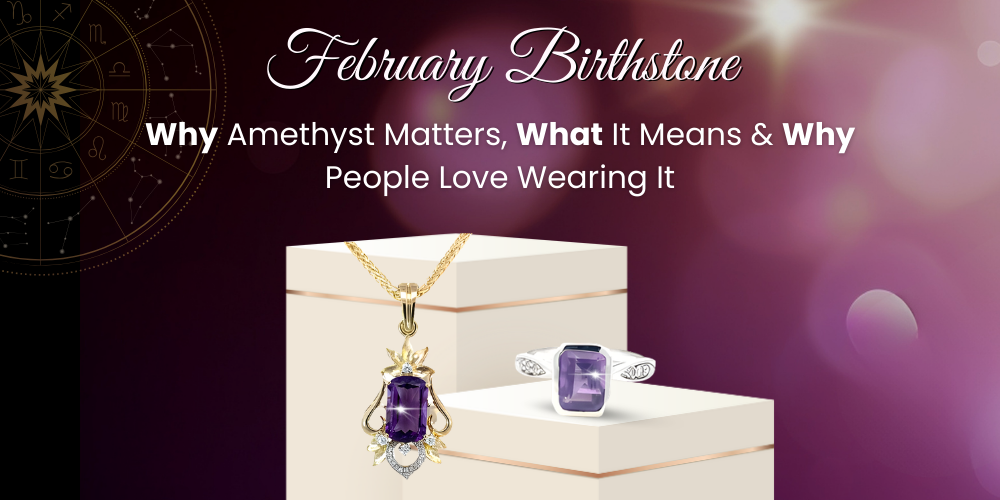
If you’re born in February, or shopping for someone who is, you’ll quickly come across one standout gem: amethyst. It’s bold without being loud, refined without being stiff, and meaningful without needing a sales pitch. That’s a strong combination in the jewellery world.
But smart customers usually want more than just “this is the February stone.” They want the backstory, the value, the wearing benefits, and practical buying guidance. Let’s walk through it properly so you’ve got the full picture.
Why Is Amethyst Associated With February?
The link between months and gemstones comes from long-standing jewellery traditions that matched each month with a stone carrying symbolic meaning. February was paired with amethyst because of its long reputation for clarity, balance, and steady judgment, qualities historically admired during times of reflection and transition.
The name comes from an ancient Greek word meaning clear-headed or not overcome by excess. For centuries, people believed the stone represented level thinking and emotional control. Over time, jewellers formalised this connection into the modern birthstone chart still used today.
So the association isn’t random, it’s rooted in heritage, symbolism, and consistent use across generations of jewellery design.
What Does Amethyst Symbolise?
Across cultures and eras, amethyst has carried a steady set of themes:
- calm thinking
- emotional balance
- inner strength
- sincerity
- personal clarity
- grounded confidence
Its rich purple colour has also long been linked with dignity and status. Before major discoveries increased supply, amethyst was considered as precious as ruby and emerald in many royal collections.
Today, customers are drawn to it because it feels meaningful without being overdone, expressive, but still tasteful.
How Does It “Help” People Born in February?
From a practical standpoint, a birthstone gives people a personal anchor, a wearable symbol tied to their month of birth and identity. That alone makes it powerful as a keepsake.
From a symbolic perspective, amethyst is often connected with:
- staying composed under pressure
- making thoughtful decisions
- encouraging focus
- supporting emotional steadiness
It’s best presented as symbolic support, not a miracle claim. Customers respond well to grounded meaning they can connect with their real lives.
For many February-born wearers, it becomes a signature piece, something that feels personally aligned rather than just decorative.
Benefits of Wearing Amethyst Jewellery
Let’s keep this grounded and customer-useful.
Emotional & Meaningful Benefits
People choose amethyst because it represents:
- calm presence in busy routines
- thoughtful self-expression
- a sense of personal balance
- meaningful identity jewellery
It’s a popular choice for milestone gifts and self-purchases because it feels intentional, not impulsive.
Style & Visual Benefits
Amethyst delivers strong visual value:
- A distinctive purple tone that stands out elegantly
- pairs beautifully with yellow gold, white gold, and silver
- works in both delicate and statement designs
- suits both modern and vintage settings
- Looks excellent with diamond accents
It gives colour without sacrificing sophistication, a rare sweet spot.
Practical Wear Benefits
From a durability standpoint:
- Hardness around 7, suitable for regular wear
- Excellent for pendants and earrings
- Very good for rings with protective settings
- Stable colour under normal conditions
That makes it a dependable everyday jewellery stone when properly set and cared for.
What Determines Amethyst Quality?
Educated buyers appreciate straight answers. Quality mainly comes down to three factors:
Colour Depth
- Rich, even purple tones are most valued
- Very pale stones sit at a lower price point
- Patchy colour reduces visual appeal
Clarity
- Clean, transparent stones are preferred
- Visible internal marks reduce value
Cut
- A sharp, well-proportioned cut brings out brightness
- Poor cutting makes the stone look dull or flat
Bigger is not always better; smaller stones often show stronger colour concentration.
Is Heat-Treated Amethyst a Problem?
Not at all, and it’s worth addressing openly.
Many amethysts are gently heat-treated to improve colour consistency. This is a long-accepted jewellery practice. It doesn’t make the stone imitation or inferior. It simply enhances the final appearance.
A clear explanation builds buyer confidence far better than silence.
Best Metal Pairings for Amethyst
Different metals create different moods:
Yellow Gold: warm, luxurious contrast
White Gold / Silver: crisp, modern look
Rose Gold: soft, romantic tone
Offering visual comparisons in your product pages or blog visuals can help customers decide faster.
When Do People Gift Amethyst Jewellery?
Beyond birthdays, strong gifting moments include:
- Valentine’s Day
- anniversaries
- graduation gifts
- achievement milestones
- personal reward purchases
- meaningful “thinking of you” gifts
Customers increasingly buy birthstone jewellery as a story piece, not just a calendar match.
Care Tips Customers Appreciate
Keep this practical and easy:
- Clean with mild soap and lukewarm water
- Use a soft brush or cloth
- Avoid harsh chemicals
- Remove during heavy manual work
- Store separately to prevent scratching
Simple care advice increases long-term satisfaction.
Straight Answers to Common Questions
Is darker amethyst more valuable?
Usually, yes-deeper, even colour is preferred.
Can it be worn daily?
Yes, especially in pendants and earrings. Rings should have protective settings.
Does the colour fade?
Not under normal wear. Avoid prolonged harsh heat exposure.
Is it suitable for men’s jewellery?
Absolutely, deeper purple stones in bold settings work very well.
Is it a good engagement ring stone?
Possible, but best in protective designs and for wearers with lower-impact lifestyles.